Wednesday, November 29, 2023

The Voting Rights Act of 1965

The Voting Rights Act of 1965 was a landmark piece of legislation in the United States that worked toward ending racial discrimination in voting. Signed into law by President Lyndon B. Johnson on August 6, 1965, the act was a response to mass deprivation of African American voters in many Southern states.


The act targeted various methods that were used to disenfranchise minority voters, such as literacy tests, poll taxes, and other discriminatory practices. Section 2 of the act prohibited any voting qualification or standard, practice, or procedure that denied or impacted the right to vote on account of race or color. Jurisdictions with a history of discrimination were required to get federal approval, before making any changes to their voting laws or procedures.

One of the most significant changes to the Voting Rights Act was Section 5, which required covered jurisdictions to get permission from the U.S. Department of Justice or a federal court before making changes to their voting laws. This change tried to prevent these jurisdictions from using new measures that could unequally take away rights of minority voters.

The act had a massive impact on increasing African American voter registration. By taking apart discriminatory rules to voting, it played an important role in the broader civil rights movement.

However, the Voting Rights Act faced legal challenges over the years. In the case of Shelby County v. Holder (2013), the U.S. Supreme Court struck down the formula used to decide which jurisdictions were subject requiring permission for changes, making Section 5 unusable. The Court argued that the formula was outdated and did not reflect current conditions. This decision weakened the enforcement of the act.

Since the Shelby County decision, there were ongoing debates about the need to update and strengthen the Voting Rights Act. Advocates argued that new forms of voter suppression have emerged. The act continues to be a critical point of discussion in the broader context of ensuring equal access to the voting booth for all Americans.


Monday, November 27, 2023

North Carolina v. Mann


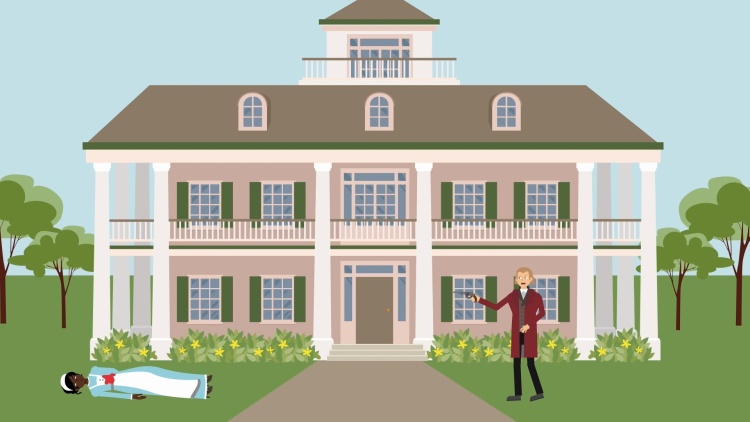
North Carolina v. Mann was a significant legal case that took place in the United States. The case centered around a slave named Lydia, who was owned by John Mann. In 1829, John Mann instructed a slave patroller, John Will, to beat Lydia as a form of punishment for her disobedience.

Lydia, seeking refuge, fled to the home of a neighbor, where she thought she would be safe. However, John Will hunted her and continued the beating in the neighbor's yard. The case brought to light the question of whether a slave owner or a slave patroller could use excessive force against a slave.


In 1830, the North Carolina Supreme Court was brought the case in the form of criminal charges against John Mann for the assault on Lydia. The court ruled in favor of Mann, claiming that slave owners had the legal right to use reasonable force to discipline their slaves, and the case did not require criminal charges.


State v. Mann, 13 N.C. 263 (1829): Case Brief Summary - Quimbee

750 × 422The decision in North Carolina v. Mann was an example of the legal system's support for slavery during that era. It reinforced the idea that slaves were considered property, and their owners had the right to control them through physical discipline. This case, along with others, added to the system of laws that supported slavery in the southern United States before the Civil War.


It's important to note that the legal and ethical perspectives on issues related to slavery and human rights have changed significantly since the time of North Carolina v. Mann. The case stands as a reminder of the complex injustices related to the legal treatment of slaves in the historic United States.


Sunday, November 26, 2023

Driving Miss Daisy


"Driving Miss Daisy" is a moving story about friendship, race, and changes in society set within the environment of the American South. The film, directed by Bruce Beresford and based on Alfred Uhry's Pulitzer Prize-winning play, presents a detailed portrayal of the changing relationship between an elderly Jewish woman, Daisy Werthan, and her African-American chauffeur, Hoke Colburn.

The story occurs in Atlanta, Georgia, beginning in 1948 when Daisy, played by Jessica Tandy, crashes her car, causing her son Boolie, played by Dan Aykroyd, to hire a chauffeur for her. Hoke Colburn, played by Morgan Freeman, becomes Daisy's driver. The movie navigates the racial tensions and societal norms of the time period, with Daisy initially against having a chauffeur and displaying her prejudices.


The center of the story lies in the bond between Daisy and Hoke that grows over the years. Despite their differences and the challenges posed by a racially divided society their relationship transforms into a wonderful friendship. Morgan Freeman's portrayal of Hoke grasps the viewers attention by capturing the character's resilience, humor, and quiet strength. Jessica Tandy's performance as Daisy earned her the Academy Award for Best Actress.

"Driving Miss Daisy" combines historical events, such as the civil rights movement, into the story, giving a broader context for the characters' experiences. The film subtly addresses issues of racism and prejudice, showing how these shape the characters' lives. The changing dynamics between Daisy, a woman from a privileged background, and Hoke, a man with a different life experience, serve as a model of the larger scale shifts occurring during the mid-20th century in society.\


The film's success comes not only in its attention grabbing performances but also its ability to cause the reader to empathize and reflect. It encourages viewers to confront their own biases and preconceptions, challenging them to see beyond societal norms and appreciate the common humanity that unites us all. The cinematography, period details, and movie musical tracks add to the film's overall emotional impact.

"Driving Miss Daisy" is a timeless cinematic gem, given four Academy Awards, including Best Picture. Its lasting appeal comes from its universal themes of compassion, understanding, and the power of genuine human connections, making it a film that multiple generations can relate to.


Brown v. Board of Education

Brown v. Board of Education, a groundbreaking Supreme Court case in 1954, declared state laws creating separate public schools for Black and...