Saturday, December 2, 2023

Brown v. Board of Education


Brown v. Board of Education, a groundbreaking Supreme Court case in 1954, declared state laws creating separate public schools for Black and white students unconstitutional. This tried to end racial segregation in schools, but the 1960s revealed how complex it was, with religious institutions having an influence.


After the Brown decision, there was strong pushback, especially in the South. Southern states used "massive resistance" laws and created private, segregated academies. Religious institutions played a role during this period. Some supported desegregation, because of their beliefs with justice and equality. Churches provided platforms for community organizing and activism.


However, some religious institutions in the South opposed desegregation, claiming religious reasons for racial segregation. This posed challenges to the broader civil rights movement. The 1960s saw significant events like the Little Rock Nine's struggle to join Central High School and legislative changes such as the Civil Rights Act of 1964.


Religious beliefs continued to shape peoples attitude toward desegregation. While certain religious groups supported the cause, others worked against it. The Civil Rights Act and the Elementary and Secondary Education Act were very important in working toward desegregation.


Policies, court orders, and community resistance shaped education throughout the 1960s and beyond. The combination of race, religion, and education during this period highlights the challenges in achieving equal educational opportunities. Understanding this complex history is essential for freshmen in college, giving insights into the effort of educational equity.


Wednesday, November 29, 2023

The Voting Rights Act of 1965

The Voting Rights Act of 1965 was a landmark piece of legislation in the United States that worked toward ending racial discrimination in voting. Signed into law by President Lyndon B. Johnson on August 6, 1965, the act was a response to mass deprivation of African American voters in many Southern states.


The act targeted various methods that were used to disenfranchise minority voters, such as literacy tests, poll taxes, and other discriminatory practices. Section 2 of the act prohibited any voting qualification or standard, practice, or procedure that denied or impacted the right to vote on account of race or color. Jurisdictions with a history of discrimination were required to get federal approval, before making any changes to their voting laws or procedures.

One of the most significant changes to the Voting Rights Act was Section 5, which required covered jurisdictions to get permission from the U.S. Department of Justice or a federal court before making changes to their voting laws. This change tried to prevent these jurisdictions from using new measures that could unequally take away rights of minority voters.

The act had a massive impact on increasing African American voter registration. By taking apart discriminatory rules to voting, it played an important role in the broader civil rights movement.

However, the Voting Rights Act faced legal challenges over the years. In the case of Shelby County v. Holder (2013), the U.S. Supreme Court struck down the formula used to decide which jurisdictions were subject requiring permission for changes, making Section 5 unusable. The Court argued that the formula was outdated and did not reflect current conditions. This decision weakened the enforcement of the act.

Since the Shelby County decision, there were ongoing debates about the need to update and strengthen the Voting Rights Act. Advocates argued that new forms of voter suppression have emerged. The act continues to be a critical point of discussion in the broader context of ensuring equal access to the voting booth for all Americans.


Monday, November 27, 2023

North Carolina v. Mann


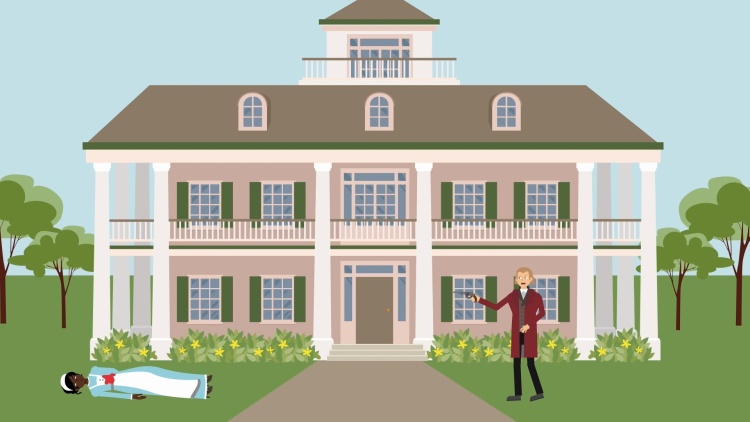
North Carolina v. Mann was a significant legal case that took place in the United States. The case centered around a slave named Lydia, who was owned by John Mann. In 1829, John Mann instructed a slave patroller, John Will, to beat Lydia as a form of punishment for her disobedience.

Lydia, seeking refuge, fled to the home of a neighbor, where she thought she would be safe. However, John Will hunted her and continued the beating in the neighbor's yard. The case brought to light the question of whether a slave owner or a slave patroller could use excessive force against a slave.


In 1830, the North Carolina Supreme Court was brought the case in the form of criminal charges against John Mann for the assault on Lydia. The court ruled in favor of Mann, claiming that slave owners had the legal right to use reasonable force to discipline their slaves, and the case did not require criminal charges.


State v. Mann, 13 N.C. 263 (1829): Case Brief Summary - Quimbee

750 × 422The decision in North Carolina v. Mann was an example of the legal system's support for slavery during that era. It reinforced the idea that slaves were considered property, and their owners had the right to control them through physical discipline. This case, along with others, added to the system of laws that supported slavery in the southern United States before the Civil War.


It's important to note that the legal and ethical perspectives on issues related to slavery and human rights have changed significantly since the time of North Carolina v. Mann. The case stands as a reminder of the complex injustices related to the legal treatment of slaves in the historic United States.


Sunday, November 26, 2023

Driving Miss Daisy


"Driving Miss Daisy" is a moving story about friendship, race, and changes in society set within the environment of the American South. The film, directed by Bruce Beresford and based on Alfred Uhry's Pulitzer Prize-winning play, presents a detailed portrayal of the changing relationship between an elderly Jewish woman, Daisy Werthan, and her African-American chauffeur, Hoke Colburn.

The story occurs in Atlanta, Georgia, beginning in 1948 when Daisy, played by Jessica Tandy, crashes her car, causing her son Boolie, played by Dan Aykroyd, to hire a chauffeur for her. Hoke Colburn, played by Morgan Freeman, becomes Daisy's driver. The movie navigates the racial tensions and societal norms of the time period, with Daisy initially against having a chauffeur and displaying her prejudices.


The center of the story lies in the bond between Daisy and Hoke that grows over the years. Despite their differences and the challenges posed by a racially divided society their relationship transforms into a wonderful friendship. Morgan Freeman's portrayal of Hoke grasps the viewers attention by capturing the character's resilience, humor, and quiet strength. Jessica Tandy's performance as Daisy earned her the Academy Award for Best Actress.

"Driving Miss Daisy" combines historical events, such as the civil rights movement, into the story, giving a broader context for the characters' experiences. The film subtly addresses issues of racism and prejudice, showing how these shape the characters' lives. The changing dynamics between Daisy, a woman from a privileged background, and Hoke, a man with a different life experience, serve as a model of the larger scale shifts occurring during the mid-20th century in society.\


The film's success comes not only in its attention grabbing performances but also its ability to cause the reader to empathize and reflect. It encourages viewers to confront their own biases and preconceptions, challenging them to see beyond societal norms and appreciate the common humanity that unites us all. The cinematography, period details, and movie musical tracks add to the film's overall emotional impact.

"Driving Miss Daisy" is a timeless cinematic gem, given four Academy Awards, including Best Picture. Its lasting appeal comes from its universal themes of compassion, understanding, and the power of genuine human connections, making it a film that multiple generations can relate to.


Tuesday, October 31, 2023

Plessy v. Ferguson Reflection

in class, we made a trial and then the team presented arguments from the side of Plessy and from the side of Ferguson in the case of Plessy v. Ferguson. They argued who should have won the case. we start with hearing from Homer Plessy, an African American man, who got onto a white-only train. People on the train knew he was part African American and reported him and he ended up getting arrested. then we head for Plessy side of the story. they presented many arguments. the one that made an in-pack on me was the legal argument. The Declaration of Independence says all men are created equal with the unalienable rights of life, liberty, and property. the 14th Amendment makes it so African Americans need equal protection under the law. Segregation is the complete opposite of what they are saying. there also was an issue with work on the white train because African Americans could not work in the white trains.
then we heard from the other said Ferguson they also had a good argument. but they say Plessy sits on the train on the white train on purpose under the Louisiana Separate Car Act. The punishment allowed for a $25 fine or jail time. yet again the 14th Amendment only covers the legal arguments. then also said a civil and state rights argument. when they argued the civil and state rights argument they said state rights argument with the 10th Amendment that each state gets to make its own laws about segregation and states say they have the power to be in charge of their own choices.

but both of the teams had really good. arguments I love hearing from both of them, I am really joy when we do the trial because I like hearing what everyone has to say.

Thursday, October 26, 2023

ETO:Lynching

what is lynching? It is the public killing of an individual who has not received any due process. These executions were often carried out by lawless mobs, the KKK, and other groups like them. Where did the term lynching come from? cam form the verb from Lynch Law, a term for a punishment without trial. Two Americans during this era are generally credited for coining the phrase: Charles Lynch (1736–1796) and William Lynch (1742–1820), both of whom lived in Virginia in the 1780s. Lynch's law is a term that is used when the Punishment of someone who is thought guilty of a crime without legal trial.
                                           

What was the largest lynching in US history?1891 New Orleans lynchings. The 1891 New Orleans lynchings were the murders of 11 Italian Americans and Italian immigrants in New Orleans by a mob for their alleged role in the murder of police chief David Hennessy after some of them had been acquitted at trial. It was the largest single mass lynching in American history. New Orleans has announced it will apologize for the lynching of 11 Italian-Americans in 1891 because the vitamins of the New Orleans lynching were accused of murder of police chief David Hennessy no evidence came about but then were allegedly died.


lynching that happened in North Carolina, 
at Tuskegee University they counted 4,745 lynchings between 1882 and 1968 of the 3,446 which involved black victims at this school. In North Carolina itself, no one knows how many lynchings happen but they think possibly as many as 300 in the years from 1882 to 1968. a known story of lynching in North Carolina is a 1970 killing that happened in Oxford North Carolina. the name of the man was Henry Marrow. he was a 23-year-old black veteran. he was known for being shot and killed by whites in a racial confrontation. Just like all these stories there are plenty of them that have been not talked about.
lynching with the Ku Klux Clan
is a domestic terrorist organization founded shortly after the United States Civil War ended. It has used intimidation, violence, and murder to maintain white supremacy in Southern government and social life. the KKK was known for used lynching. The lynching of Michael Donald was known to be one last lynching that had to do with the KKK. members of the Ku Klux Clan beat and killed him. he was only 19 years old when this happened to him. After they killed him they hung his body on a tree and left him there.
lynching come to an end. Ida B. Wells fought for lynching to end. Who was Ida B. Wells was an African-American journalist and activist who led an anti-lynching crusade in the United States in the 1890s. she exposed lynching by publishing her findings in a pamphlet and writing several columns in local newspapers. Then they could not hide anymore because everyone would just turn a blind eye to it. she also Washington, DC, to implore President William McKinley to institute reforms against lynching and discrimination. know next time someone asks you what is lynching you know what to say.

Monday, October 2, 2023

Town Hall Meeting Reflection

The Town Hall Meeting presented as from the Civil War times. we either assigned anti-slavery or pro-slavery. I was anti-slavery side I like to hear everyone else augments. But after hearing everyone’s arguments from both sides I have learned so much most of The class was pro-slavery arguments. here are someone of the people i got hear from.

I got to learn about Harriet Tubman. all about her life. She has been fighting slavery her whole life and always wanted to help so she helped with the Underground Railroad. Even though she got often money to stop and tell where these slaves went she would not give up she had hope. she went on to create remedies for injured soldiers in the Civil War times. after she about her in class, I wanted to know which remedies she made so I would. I didn’t know what it was when I looked at it up the end. she ended up making Remedies for smallpox and malignant fever. I find it so interesting and pound even though I Don”t know her when you get into her story it is inspiring.

I really in joy mock trail i like to see my whole class get into character and see how passionate they get.


Sunday, October 1, 2023

Gone With the Wind Reflection

gone with the Wind takes place in 1936, in Clayton County and Atlanta both in Georgia. during Civil War times. in the movie, you meet Scarlett O’Hara, the main character movie she is a spoiled southern bell who is used to getting her way with things. her dad is a plantation owner.
They also own slaves their relationship with them is somewhat different because she looks at one of them more like a mom than anything else she has always been there for her and helped pick out a dress and get ready. it is more care take relationship than anything else.
Scarlett O’Hara is. madly in love with Ashley Wilkes who ends up marrying his cousin. but she still holds. out hope for them to end up together. Scarlett out of spite end. up marries Charles. Charles ended up dying during the war. in the movie, you see a lot of sadness and death because of the war. a sense that stood out to me was when Scarlett was wearing all black because she was supposed to be mourning Charles, but it made her mad because she didn't really care what he passed she never really loved him.

Overall, I really like this movie and would watch it again.it is a good history movie but does feel like a history movie. I love all the secret messages in the movie.

Thursday, September 21, 2023

Town Hall Meeting


My name is Mary Ann Shadd was born October 9, 1823,

in Wilmington, Delaware. I am the oldest of 13 siblings.

I was not a slave cuz my parents were free.

My mom is Harriet Parnell from North Carolina and my dad is 

Abraham Doras Shadd, who was a shoemaker in Wilmington, Delaware,

and a leader in Delaware's free Black community. My parents raised me in

a family dedicated to the abolition of slavery and in my childhood home

often served as a shelter for fugitive slaves.

We were forced to relocate because it was legal to educate black people in Delaware.  We moved to Pennsylvania where I went to a Quaker boarding school. I used my education to start a school for black children in Pennsylvania. Then we had to move to Canada because we were jeopardized because of the Fugitive Slave Act. 

But my dad got elected the counselor of Riley Township. This election made Abraham the first black man in a political office. 

In 1849 I published a 12-page pamphlet called Hints to the colored people from the north. I was the first woman to write a newspaper and be published in North America and I had to use my brother to hide because women were not allowed to be written. I had an anti-slavery newspaper where we told other African-Americans in Canada about opportunities for them and if they needed help to escape. Where to find us and how we would help. 

I was the second black woman who got a law degree after graduating from Howard University.  

I was raised to not worry about the boundaries to always break them and push them, I grew up seeing my parents always helping anti-slavery And I always knew I wanted to do the same. When I was growing up I was told I wasn’t allowed to do a lot because I was a woman and not even just a woman. I was a black woman. I never let that stop me from pushing the boundaries. And I am so proud of everything I have done and falling in my dad's footsteps and how many people ended up helping.  


Thursday, September 14, 2023

slavery bible debate

In the Bible there is nothing condoning the heinous act of slavery. However, as we know, many slave owners would call themselves Christian and claim to be following what the Bible says. This is not what the Bible says, but they twist the words to fit the frame of their small and narrow mind.  

There are many verses in the Bible that call to serve one another for the glory of God. Among these being  Ephesians, VI, 5-7 stating: “Servants, be obedient to them that are your masters according to the flesh, with fear and trembling, in singleness of your heart, as unto Christ; not with eye-service, as men-pleasers; but as the servants of Christ, doing the will of God from the heart; with good will doing service, as to the Lord, and not to men: knowing that whatsoever good thing any man doeth, the same shall he receive of the Lord, whether he be bond or free.” This verse tells us many things, first that we are to be obedient not to men, but to Christ. This alone shows that the bible does not condone slavery, but people read what they want to see not what is there. Instead of emphasizing “as the servants of Christ, doing the will of God from the heart”, it turns into “servants be obedient to your masters with fear and trembling” and the whole reason for this verse in the Bible is taken out. This is outlandish because the Bible highlights how the Israeli and Jewish people were exiled and taken as slaves in Egypt. 

Other people claiming to be Christian were extremely self-righteous and arrogant, genuinely believing their cruel and inhumane ways were helpful to the slaves. The History Engine even says, “Slaveholders believed that slavery would liberate Africans from their savage-like ways, especially if they were infused with Christianity. As religion ran deep through slavery, white Christian slaveholders argued that slavery was a necessary evil because it would control the sinful, less humane, black race.” These ideals are disgusting and vile; this was normal at the time.  

It is inspiring to see how far we have come from this, but there is still a long road ahead of us. 


Although many slave owners believed they were following the Bible by having slaves, in reality the Bible says otherwise. Many times in the bible it has statements guiding one who follows it to be against slavery. A example  In Exodus 21:16 it states  

“Whoever steals a man and sells him, and anyone found in possession of him, shall be put to death.” meaning if you buy a human or sell a human you shall die.if you had a slave you had to buy then so it would not be supporting slavery. Another example is Exodus 21:20-21 say “When a man strikes his slave, male or female, with a rod and the slave dies under his hand, he shall be avenged. But if the slave survives a day or two, he is not to be avenged, for the slave is his money.” you can clearly see in these states then to not support it. Everything slavery stands for. Then do not want you to hit  your salve then say you will get karma. The bible does not stand for treating humans differently and hurting each other. 

Wednesday, September 13, 2023

The Supreme Court

This shows how important the Supreme Court is and all of its glory. The Supreme Court has the most judicial power then plays a big role in our government. in the video, you see how much work and effort actually goes into it even stuff won't think about. The video has also given me an understanding of what the Supreme Court does and why they are important. then go through a hundred new cases a week Imagine how much hard work goes into that. actually really intrigued me and I would be excited to learn more about it. 


Brown v. Board of Education

Brown v. Board of Education, a groundbreaking Supreme Court case in 1954, declared state laws creating separate public schools for Black and...